



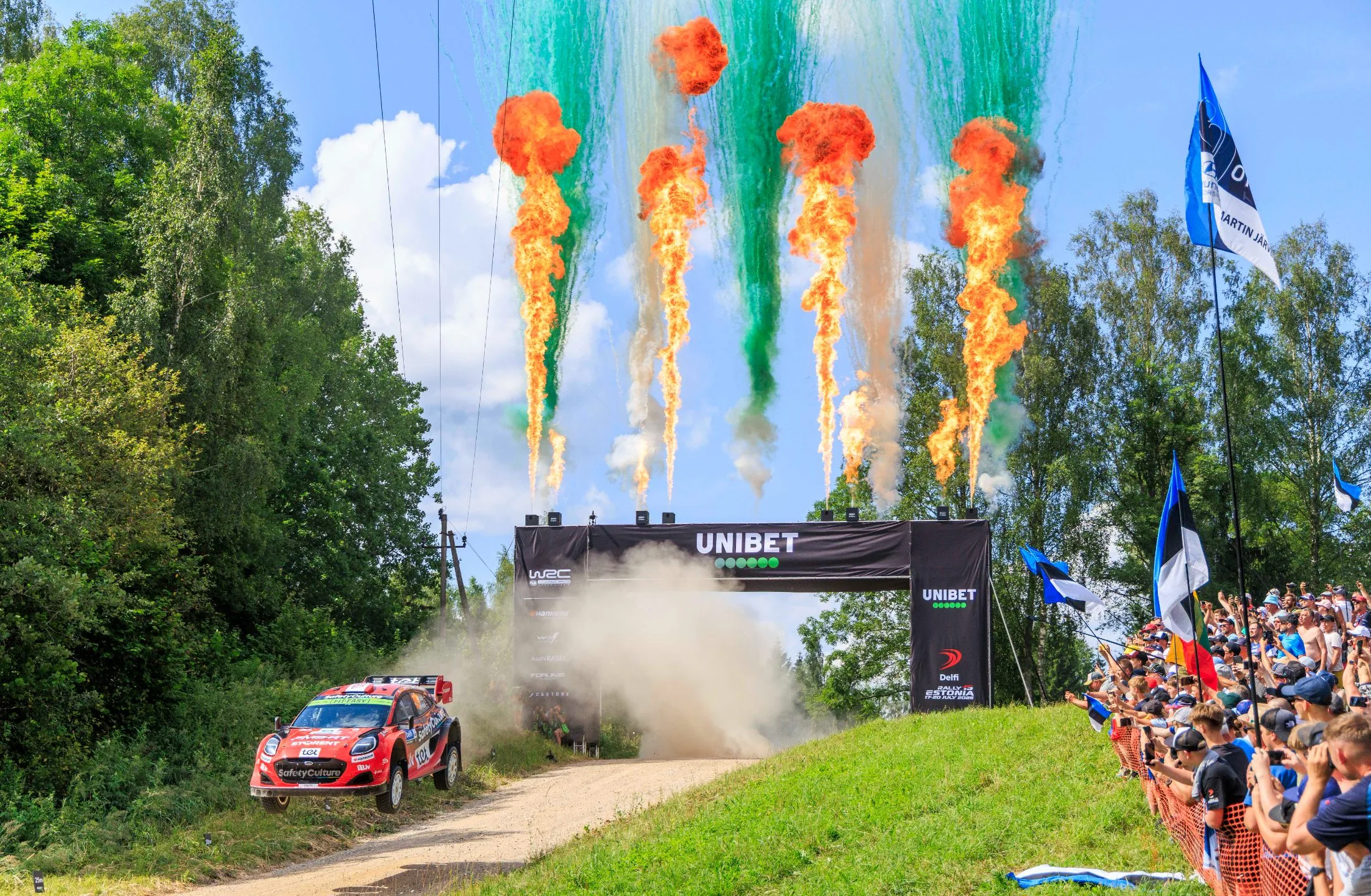
Rally programme
Four days of rallying, from Thursday night's ceremonial start on Tartu's town hall square to Sunday's Wolf Power Stage at Kääriku. Pick a day and follow it, minute by minute.
Rally Estonia 2026 is round nine of the FIA World Rally Championship and the first outing in the sport's new compact format - roughly 48 to 50 hours from shakedown to the finish. Shakedown runs on Friday morning, the fight for the win stretches from Friday afternoon to the Sunday finale around 14:00, and Thursday is a free-to-attend fan day laid on by the organisers.
Estonian gravel is famous for its pace - this is one of the fastest events on the WRC calendar, with long straights, flowing curves and the signature crests that launch the cars tens of metres into the air. You'll find the full mix on the route: proper arenas with parking, screens and food, plus quiet forest vantage points with that old-school rally feel.
Our advice: build your trip around the free Service Park and EXPO in Tartu, add one or two stages a day, and leave time to get between them - the distances add up and the best spots fill early. Each day is broken down below.
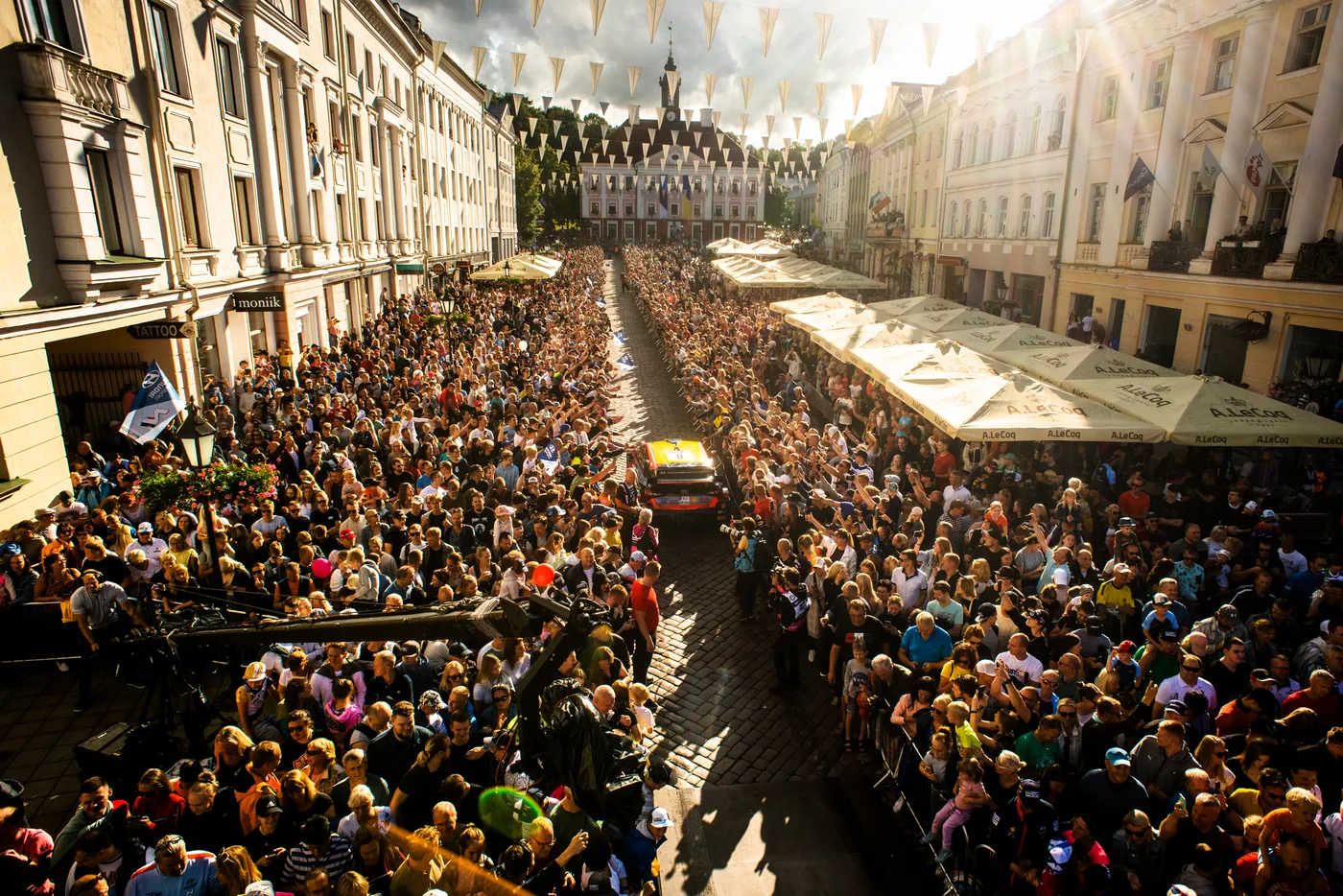
Estonian National Museum (Muuseumi tee 2, Tartu), free entry on every day of the rally. Watch the teams work right next to the WRC service area, then explore simulators, partner zones, food stalls, the merchandise shop and daily meet-and-greets with the crews.
Rally maps
The official route maps, day by day. Pick a day to see the special stages and where the key action happens. Tap a map to open the full-size image in a new tab.
Stages day by day
The ceremonial start takes place on Thursday 16 July on Tartu's town hall square (Raekoja plats) - free entry. Competitive running starts on Friday 17 July. Pick a day, open a zone and check the opening times, the first car and how to get there.
Camper and tent
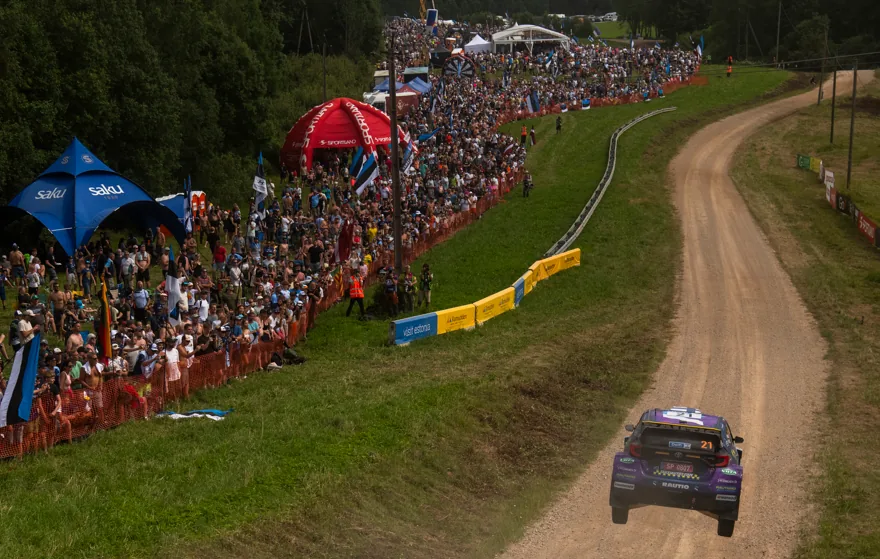
Stageside spots / on the stage
Sleep right by the route - best access, limited capacity.
General parking / overflow
More capacity, campers welcome, a short walk to the spectator zone.
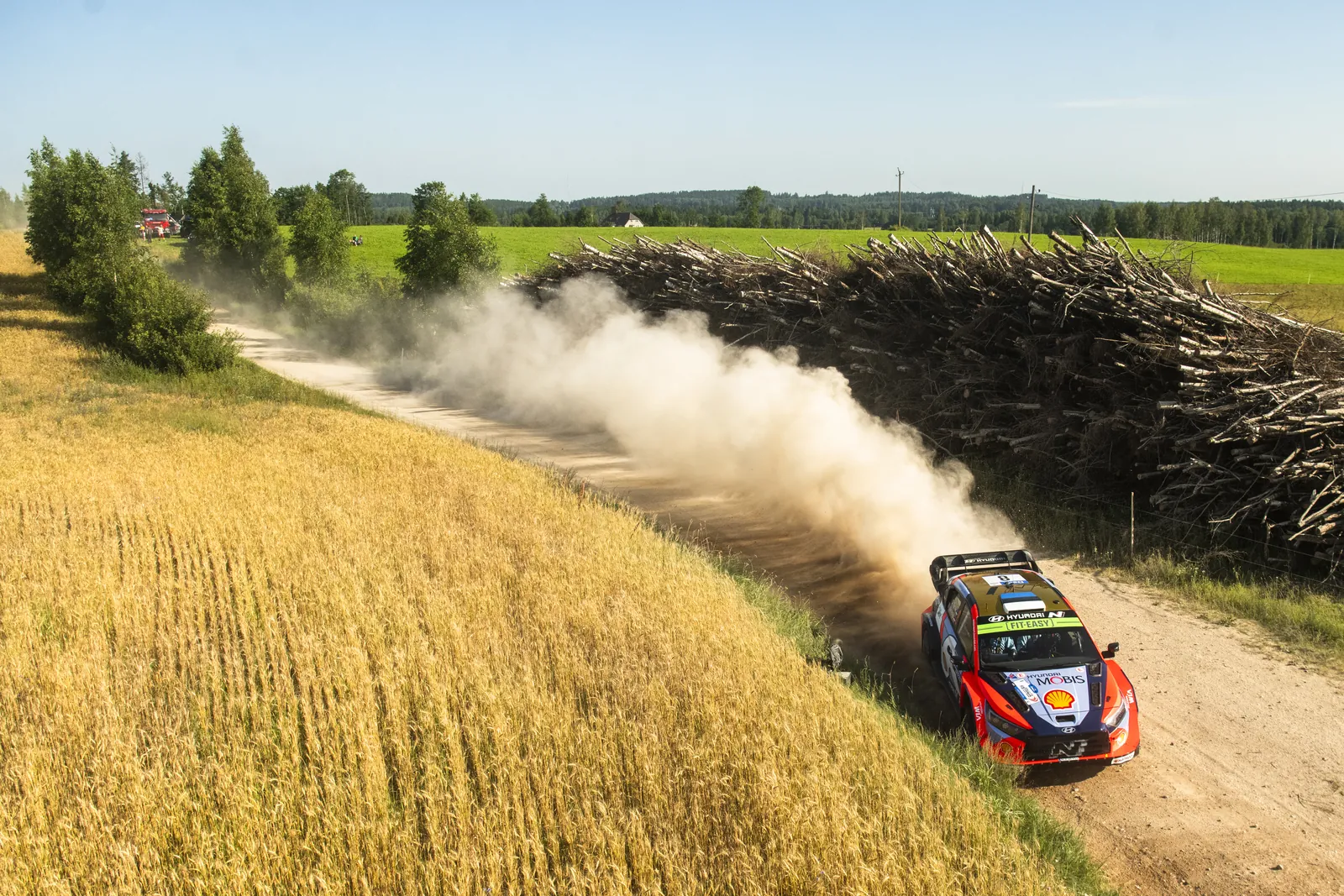
Aerial views and every zone on one map
An interactive map with pins for every spectator zone. Tap a pin to see the details and get directions.
Explore Estonia
You've come a long way - stay an extra day or two and see the country. Here's what to do in Tartu, across southern Estonia and around the Baltic region.
Tartu, the host city
Estonia's second city and European Capital of Culture 2024 - a young, university town on the river Emajõgi. The old town centres on the town hall square (Raekoja plats) with its town hall and the "Kissing Students" fountain. Climb Toome Hill (Toomemägi) for the ruins of the medieval cathedral and views over the city, drop into the AHHAA science centre (the biggest in the Baltics) and the Estonian National Museum (ERM). St John's Church stands out for its hundreds of terracotta figures and viewing gallery; the Botanical Garden is worth an hour, and the wooden districts of Supilinn and Karlova are full of street art and character.
Southern Estonia
The rally runs on the roads of southern Estonia - a region with real character. Otepää is often called the country's "winter capital", and it's here, at the Kääriku sports centre, that the rally finishes. Along Lake Peipus (the fourth-largest lake in Europe) runs the Onion Route: villages of Russian Old Believers - Kolkja, Kasepää and Varnja - with colourful wooden houses, smoked fish, onion pie and tea from the samovar. Alatskivi Castle is a nice detour, and deeper into the region you'll find the distinct Seto culture (Setomaa) and the UNESCO-listed smoke saunas of Võromaa.
On the way / Baltic road trip
If you're driving up through Lithuania and Latvia, it's easy to break the trip into stops. In Kaunas make time for the old town, the castle and the Laisvės alėja pedestrian avenue. A little further, near Šiauliai, sits the extraordinary Hill of Crosses. Riga rewards the visit with its old town, art nouveau streets, the Central Market housed in former Zeppelin hangars, and the Freedom Monument. If you've got the time, roughly halfway you also pass Rundāle Palace - the Baltics' own "little Versailles".
Practical / good to know
Estonia, Latvia and Lithuania are all in the eurozone and the Schengen area, so the whole route runs border-free and you pay in euros throughout. The stages themselves are fast gravel; the ordinary drive to Tartu is tarmac all the way. In smaller towns fuel stations and shops are more spread out - it's worth filling up and stocking up in advance.
Tickets
We sell official Rally Pass tickets for the event. A camper doesn't need a separate ticket - the driver's Rally Pass is enough.
53 crews from 23 countries and 11 Rally1 cars on the entry list, with the likes of Ogier, Evans, Katsuta, Solberg and Pajari. It's also one of the last chances to see the current generation of Rally1 cars on Estonia's fast gravel - the technical regulations change from the 2027 season.